
What General Liability Covers
General liability (GL) covers business risks that fall outside the scope of commercial auto liability. While auto liability covers what happens when your truck is being driven, general liability covers what happens off the road: at your office, at customer sites, during loading and unloading, and during other business activities.
Standard general liability policies cover:
- Bodily injury to third parties caused by your business operations (a customer trips on a curb at your facility, an employee accidentally injures a non-employee during loading)
- Property damage to third parties caused by your business operations (your operations damage a customer's loading dock, you knock over a forklift at a warehouse)
- Personal and advertising injury (libel, slander, copyright infringement in advertising)
- Medical payments for minor injuries to non-employees, regardless of fault
- Legal defense costs for covered claims (typically in addition to the policy limit)
Why Trucking Operators Need GL
Most trucking operations have non-driving exposures that auto liability does not cover:
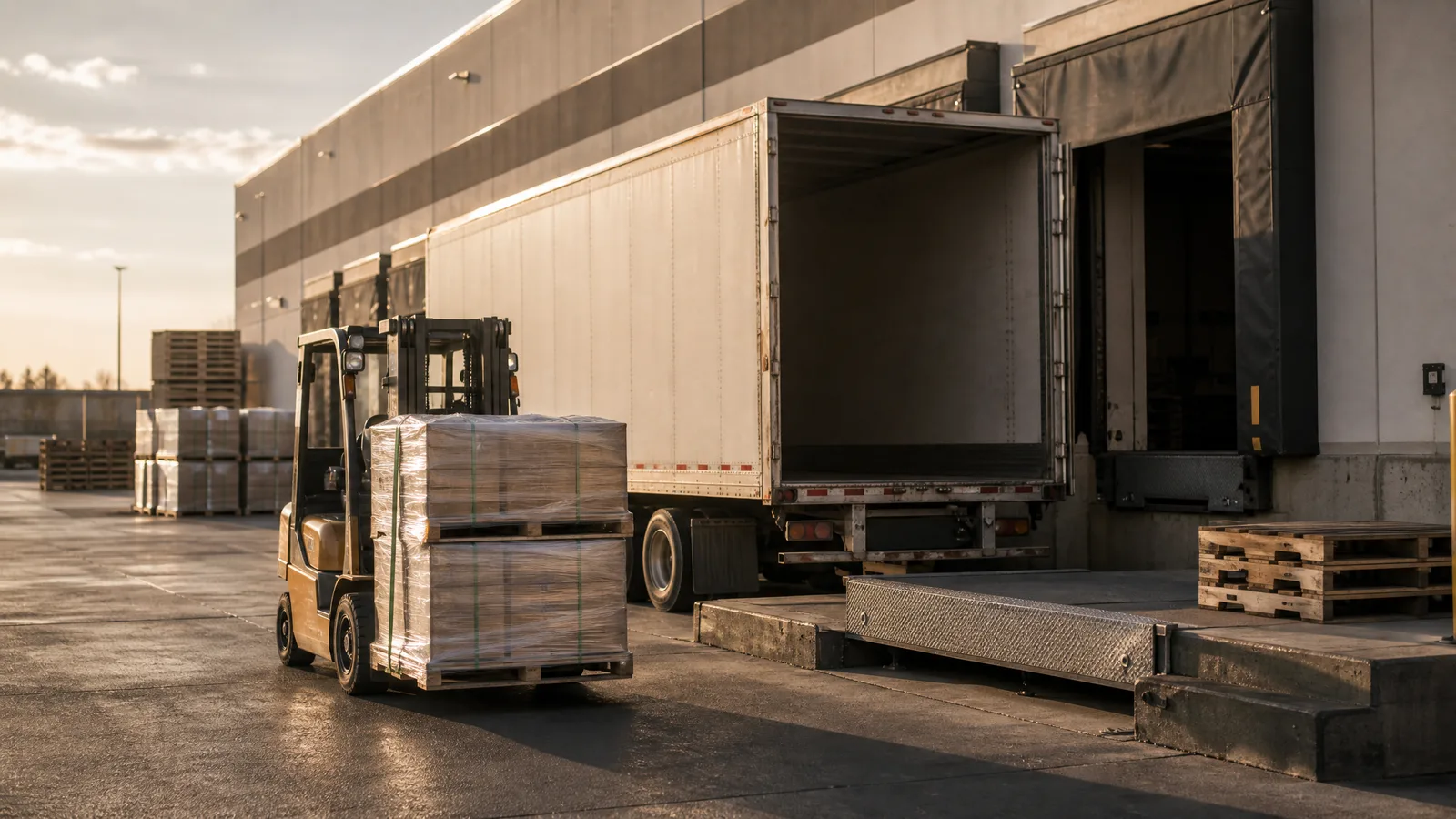
- Loading and unloading at customer sites. If your driver knocks over inventory while loading or causes property damage at a customer's dock, GL responds (or sometimes a combined auto/GL policy).
- Operations at your facility. Customers, vendors, and visitors come to your office or yard. Slip-and-fall accidents and similar incidents are GL claims.
- Construction site operations. Dump truck and flatbed operators on construction sites face exposure to incidents that have nothing to do with driving the truck (debris damage, worker injury, equipment damage to the site).
- Vendor and supplier interactions. Damage caused at parts suppliers, fuel stops, or maintenance facilities.
- Contractual liability. Many shipper and broker contracts include indemnification language that triggers GL coverage if you are sued because of the contract.
Standard GL Limits
Typical commercial GL policies use a layered limit structure:
- Per occurrence: $1,000,000 standard. The maximum the policy pays for any single incident.
- General aggregate: $2,000,000 standard. The maximum the policy pays in total across all incidents during the policy term.
- Products / completed operations aggregate: $2,000,000 standard. Specific limit for claims arising from completed work or products.
- Personal and advertising injury: $1,000,000 per offense.
- Each premises medical payments: $5,000 to $10,000 per person.
Most commercial trucking customers and contracts require $1 million / $2 million as the baseline. Some larger contracts require higher limits, often satisfied with an umbrella policy stacking additional limits above primary GL.
Common Customer-Required Endorsements
Many shipper and contract requirements include specific GL endorsements:
- Additional insured status. The customer or contracting party is listed as an additional insured on the policy. Most major shippers require this.
- Waiver of subrogation. The insurer agrees not to subrogate against the customer if the operator's policy pays a claim involving the customer.
- Primary and non-contributory. The operator's policy is primary, even if the customer has their own insurance that could respond. Customer's insurance does not contribute to claims involving the operator.
- Per project / per location aggregate. Reinstates the aggregate limit for each separate project or location, instead of having a single combined aggregate.
- 30-day notice of cancellation. The insurer agrees to give the customer 30 days notice if the policy is cancelled or non-renewed.
Each endorsement adds to the GL premium, but most are required by major customers and are not optional in practice.
How Much Does General Liability Cost?
General liability is one of the smaller line items in a trucking program. Insureon reports a median of $51 per month ($606 per year) for general liability among its trucking customers, on policies averaging $1 million per occurrence and $2 million aggregate (updated June 2025). Ordered from lowest to highest typical premium, holding driver record, operating radius, and coverage limits constant:
- Single-truck owner-operator, basic GL
- Single-truck operator with facility (yard, office)
- Small fleet (3 to 10 trucks) with shared facility
- Mid fleet (11 to 25 trucks)
- Construction/dump truck operations on TxDOT sites: Premium often higher due to elevated exposure on active construction sites
Combined Auto / GL Policies
Some commercial trucking insurers offer combined motor carrier policies that bundle auto liability and general liability into a single policy. The advantages: simpler administration, single claim point of contact, often slight bundle discounts. The disadvantages: less flexibility to customize each coverage, potential for both coverages to be affected by a single significant loss. Most fleets and many owner-operators prefer separate policies for the flexibility, but combined policies work well for operators who want simplicity.
How to Get General Liability Quotes
GL is usually quoted as part of a full commercial trucking insurance package. The same agent who handles your auto liability typically writes your GL.
Find an agent who writes commercial trucking coverage including general liability. Tell them about your facility, customer types, and any specific contract requirements.
Related Coverage Resources
- Commercial Auto Liability
- Workers Compensation for Trucking
- Dump Truck Insurance (where GL is especially important)
- Fleet Insurance