
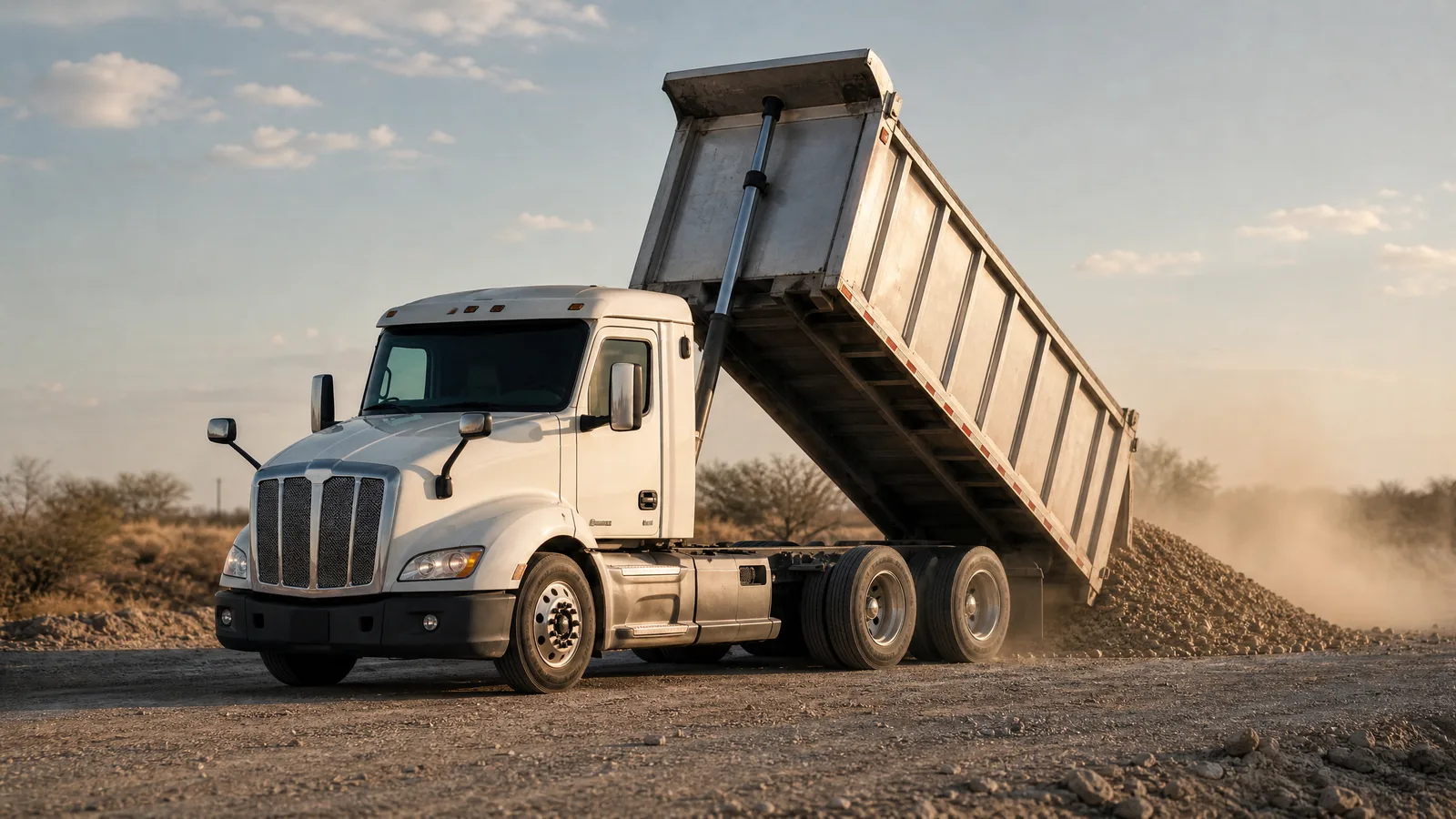
Dump Truck Insurance: What You Need to Know
Dump truck operators have a different risk profile than standard freight haulers. The trucks are heavier, the loads are bulkier, the routes often run through active construction sites with low overhead clearances and uneven ground, and the cargo can range from clean aggregate to contaminated demolition debris. Insurance products built for dry van or flatbed operators do not always fit well. Dump truck insurance is its own niche.
The risks specific to dump trucks include: tipping during dumping, load shifts during transport, struck-by incidents on construction sites, dust and debris generation that can cause property damage, and pollution exposure when hauling contaminated material. Each of these maps to a different coverage product, which is why dump truck operators usually carry a deeper coverage stack than over-the-road freight haulers.
Coverage Types for Dump Trucks
The standard dump truck coverage stack:
- Commercial auto liability: Required for all motor carriers. FMCSA minimum is $750,000 for general freight (49 CFR 387.9). Most TxDOT and large commercial contracts require $1 million per occurrence, sometimes $2 million.
- Cargo insurance: Covers the material you are hauling. Aggregate, fill dirt, and standard construction materials are low-value per load, and there is no federal cargo minimum for this work. Brokers and direct customers set the requirement, typically $50,000 to $100,000 in cargo coverage.
- Physical damage: Covers the truck itself for collision and comprehensive. Dump trucks are expensive to repair (the bed, hydraulic system, and tailgate are big-ticket items), so physical damage coverage is important even if the truck is paid off.
- General liability: Covers non-driving business risks like injuries on a construction site, property damage from your operations (debris damage, dust, vibration), or accidents during loading and unloading. Required by almost every general contractor.
- Inland marine / equipment floater: If you carry tools, attachments, or accessories on the truck, this covers them separately from the truck itself.
- Workers compensation: For employees. Optional in Texas but typically required by general contractors and government agencies.
- Pollution liability: If you haul contaminated soil, demolition debris, or anything that could cause environmental damage, this covers cleanup and third-party claims.
- Umbrella / excess liability: Sits on top of your other liability policies and provides additional limits. Many dump truck operators carry $1 million to $5 million in umbrella coverage to satisfy contract requirements and protect against catastrophic claims.
| Operation Type | Auto Liability | General Liability | Pollution | Equipment Floater |
|---|---|---|---|---|
| Aggregate / clean fill | Required | Required | Optional | Optional |
| Construction debris | Required | Required | Recommended | Optional |
| Demolition debris | Required | Required | Required | Recommended |
| Contaminated soil | Required | Required | Required | Recommended |
| Oilfield service hauling | Required | Required | Required | Required |
How Much Does Dump Truck Insurance Cost?
Dump work is rated as vocational trucking: heavy payloads, tight jobsites, frequent backing, and rollover exposure. What you haul and where matters more than the truck itself. Ordered from lowest to highest typical premium, holding driver record, operating radius, and coverage limits constant:
- Larger fleet (10+ trucks, established)
- Small fleet (3 to 5 trucks, mixed construction work)
- Single owner-operator dump truck (clean aggregate, local)
- Single owner-operator dump truck (mixed construction debris)
- Demolition or contaminated soil specialty
- Oilfield service hauling
Factors that increase dump truck premiums:
- Hauling contaminated soil, hazmat, or demolition debris
- Long-haul work (dump trucks are typically priced for local; OTR is unusual and expensive)
- New operator (under 3 years in business)
- CDL violations or recent accidents on driver MVRs
- Older trucks with limited safety equipment
- Working on TxDOT or large municipal projects (higher liability limits required)
Factors that decrease dump truck premiums:
- Clean MVRs and CSA scores
- Local or short-haul radius (under 100 miles)
- Multiple trucks (fleet discounts kick in at 3 to 5 trucks)
- Safety equipment: backup cameras, dashcams, GPS tracking, side-view cameras
- Formal driver training program
- Years of clean operating history
Dump Truck Insurance by Operation Type
Different segments of dump truck work have different insurance profiles:
- Aggregate hauling (sand, gravel, crushed stone): Common in Texas road construction. Standard coverage stack. Pollution exposure is low. Repeat customers and predictable routes make this segment less risky and generally cheaper to insure.
- Construction site work: Hauling fill, base material, and site debris. Risks include site congestion, struck-by incidents, and load shifts. General liability is a must because most prime contractors require certificates with their company listed as additional insured.
- Demolition hauling: Higher risk because demolition debris can include asbestos, lead, or other contaminants. Pollution liability is essential. Some insurers will not write demolition operators at all; you need an agent with surplus lines markets.
- Sand and gravel pit work: Often involves operating on private pit roads. Auto liability still applies, but pit-only operations can sometimes reduce on-road exposure. Worth discussing with your agent.
- Oilfield service hauling: Frac sand, drilling mud, and oilfield waste. High-value loads, remote routes, and pollution exposure all push premiums up. Common in the Permian Basin and Eagle Ford Shale regions of Texas.
- Snow and ice removal: Not common in most of Texas, but some North Texas dump truck operators run plow contracts. Adds winter operations risk to the policy.
- Farm or agricultural use: Not for-hire dump truck work, but if you haul your own farm products, you may qualify for lower-cost farm truck coverage instead of full commercial trucking.
Dump Truck Insurance in Texas
Texas is one of the largest dump truck markets in the country. Year-round construction (no winter shutdown), oilfield activity in the Permian and Eagle Ford, and continuous TxDOT highway expansion create steady demand. Texas-specific considerations:
- Workers comp is optional but contractually required. Texas does not require private employers to carry workers comp. However, most general contractors and TxDOT subcontract requirements demand it. Most multi-truck dump operations carry it because the alternative is losing access to major customers.
- TxDOT subcontractor insurance requirements come from the subcontract. TxDOT sets what a prime carries in Standard Specification Item 3, and primes flow their requirements down to subcontractors, commonly with endorsements attached (additional insured, waiver of subrogation, primary and non-contributory). The limits vary by project, so read the insurance exhibit in your own subcontract before quoting the work.
- Hurricane and severe weather exposure. Gulf Coast dump truck operators face hurricane season risk. North Texas operators face hail risk. Both factor into physical damage premiums.
- Texas litigation environment. Texas has had several large jury verdicts in commercial trucking cases. Dump truck operators carry higher umbrella limits than they would in some other states.
- Permian Basin opportunity, Permian Basin pricing. Oilfield dump truck work pays well but the insurance is among the most expensive in the country due to remote operating environments, equipment values, and pollution exposure.
For more on the Texas market, see our Texas commercial trucking insurance overview.
How to Get Dump Truck Insurance Quotes
Information you will need when getting quotes:
- Truck year, make, model, VIN, and GVWR for each truck
- Truck value (cost or current market) for physical damage rating
- Driver names, CDL info, MVR for the past 3 to 5 years
- Typical haul distance and operating radius
- Cargo types you haul (be specific: aggregate, demolition, contaminated soil)
- USDOT and MC number, if applicable
- Customer types (private contractors, TxDOT, municipalities, oilfield)
- Loss runs (claims history) for the past 3 to 5 years
Dump truck insurance is a specialty within commercial trucking. Working with an agent who has experience writing dump truck policies (and who has surplus market access for harder-to-place risks like demolition or contaminated soil) gets you better coverage and better pricing. Find an agent who specializes in dump truck insurance in Texas.