
Tanker Truck Insurance: What You Need
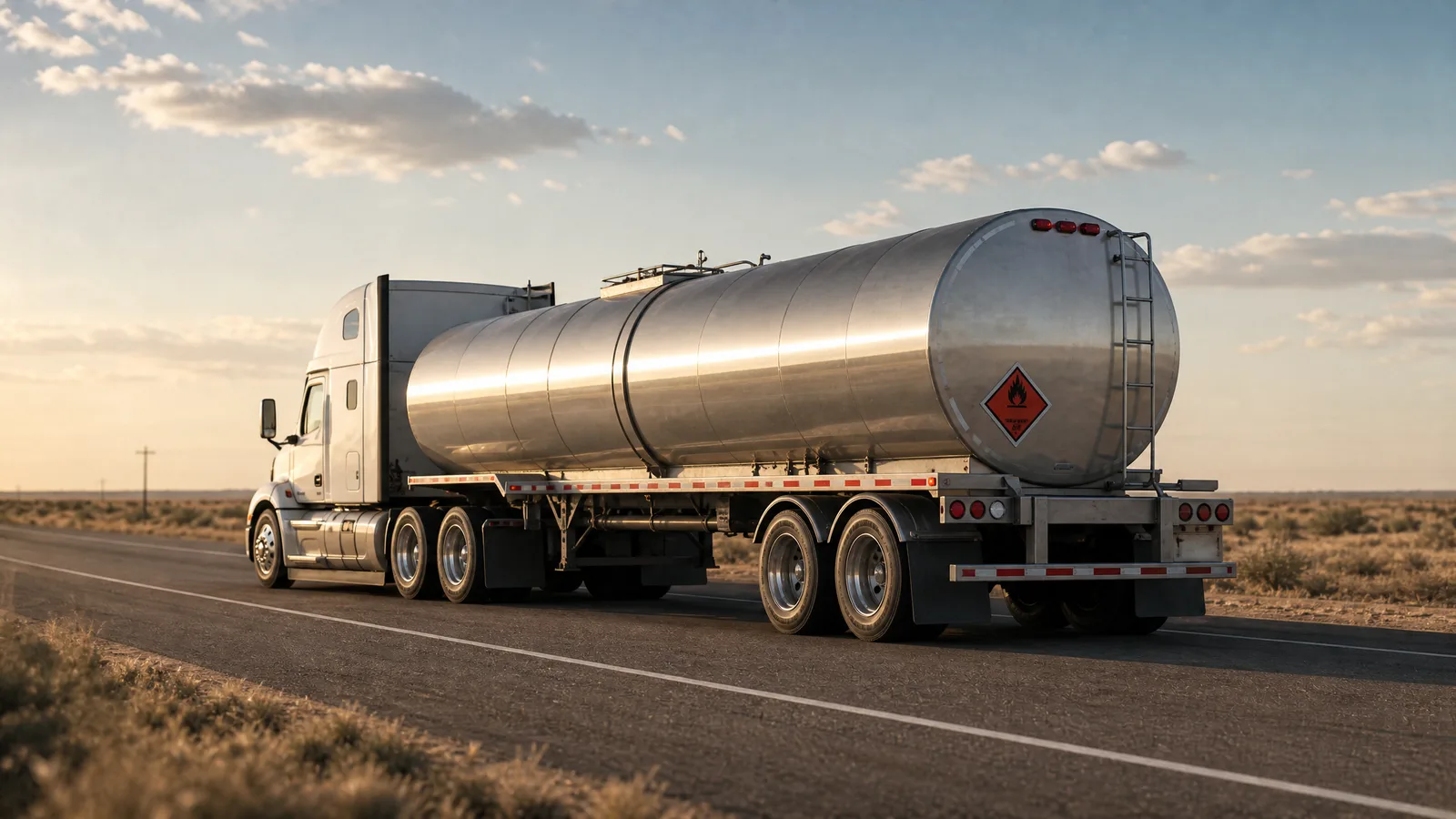
Tanker trucking covers any operation moving liquid cargo: fuel and petrochemicals, industrial chemicals, food-grade liquids (milk, edible oils, juices), water, and specialty industrial fluids. The insurance market splits sharply between hazmat tanker operations (fuel, chemical, certain industrial liquids classified under DOT hazmat regulations) and non-hazmat tanker operations (water, food-grade liquids). The two segments have very different liability minimums, premium ranges, and carrier markets.
Hazmat vs. Non-Hazmat Tanker Operations
The classification of the liquid cargo determines which insurance regime applies:
| Cargo | Classification | FMCSA Liability Minimum | Pollution Coverage Needed? |
|---|---|---|---|
| Gasoline, diesel, fuel oil | Hazmat | $1,000,000 | Yes |
| Crude oil | Oil transport | $1,000,000 | Yes |
| LPG, propane, natural gas liquids (in bulk) | Hazmat (Division 2.1/2.2 in bulk) | $5,000,000 | Yes |
| Industrial acids, solvents | Hazmat (varies by class) | $1,000,000 to $5,000,000 | Yes |
| Poisonous gases, certain chemicals | Hazmat (49 CFR 171.8) | $5,000,000 | Yes |
| Milk, dairy | Non-hazmat food-grade | $750,000 | Sometimes (contamination) |
| Edible oils, food-grade liquids | Non-hazmat food-grade | $750,000 | Sometimes |
| Water | Non-hazmat | $750,000 | No |
Source: 49 CFR 387.9.
Coverage Types for Tanker Operators
- Commercial auto liability. FMCSA minimum applies based on cargo classification (see table above). Most operators carry above the federal minimum to satisfy shipper contracts.
- MCS-90 endorsement. Required for hazmat tanker operations as proof of financial responsibility.
- Pollution liability. Essential for hazmat tankers. Covers environmental cleanup of spills and third-party pollution claims. Standard auto liability typically excludes pollution losses.
- Cargo insurance. Limits sized to cargo value. Fuel cargo can run $50,000 to $100,000 per load. High-value chemicals can be much higher.
- Physical damage on tractor and tanker. Tankers are specialized equipment. Stainless steel chemical tankers can cost $150,000+. Fuel tankers run $80,000+. Physical damage limits matter.
- Cleaning and inspection coverage. Some food-grade tanker operators carry coverage for cleaning and inspection failures that lead to contamination claims.
- Contamination liability. Specifically for food-grade and pharmaceutical tankers. Covers claims arising from cargo contamination.
- General liability. Standard.
- Workers compensation. Optional in Texas; usually required by major shippers.
- Umbrella / excess liability. Hazmat tanker operators commonly carry $5 million to $25 million in umbrella to satisfy contracts and protect against catastrophic claims.
How Much Does Tanker Truck Insurance Cost?
Tanker pricing tracks the hazmat classification of what is in the tank, plus cargo value and operating profile. Ordered from lowest to highest typical premium, holding driver record, operating radius, and coverage limits constant:
- Non-hazmat tanker (water, milk, food-grade), single owner-operator
- Small fuel tanker fleet (3 to 10 trucks)
- Fuel tanker (gasoline, diesel), single owner-operator
- Crude oil tanker, single owner-operator
- Chemical tanker, single owner-operator (depends on commodity)
- Specialty hazmat tanker (acid, poisonous, etc.)
- Pollution liability (separate or combined): a meaningful per-truck cost on top of the auto liability premium; commodity and limits drive it
Tanker Insurance in Texas
Texas has the largest concentration of hazmat tanker operators in the country, driven by the petrochemical and oilfield industries. Texas-specific considerations:
- Houston petrochemical corridor. Largest US petrochemical complex. Most petrochemical tanker operators are based in or near Houston.
- Permian Basin and Eagle Ford crude oil. Crude oil tanker demand has grown substantially with US shale production. Specialty equipment (insulated, heated, vacuum) for various crude grades.
- Frac fluid and produced water. Oilfield services use vacuum trucks and tankers to move drilling fluids and produced water. Pollution liability is essential.
- Texas dairy. Texas has growing dairy operations in the Panhandle. Milk tanker demand follows.
- Hurricane and storm surge exposure. Gulf Coast tanker terminals and storage facilities face hurricane risk that affects pollution and physical damage premiums.
- Texas Railroad Commission jurisdiction. Some intrastate oilfield tanker operations fall under TRC rather than TxDMV, with separate permit and insurance requirements.
For more on the Texas market, see our Texas commercial trucking insurance overview and the Houston commercial trucking insurance page.
How to Get Tanker Truck Insurance Quotes
Information you will need:
- Tractor and tanker year, make, model, VIN, capacity, and value
- Tanker type (DOT 406 fuel, DOT 407 chemical, DOT 412 corrosive, food-grade, water, etc.)
- Specific cargo (commodity, UN number for hazmat, hazard class)
- Driver CDL info, hazmat endorsement, tanker endorsement, and MVRs
- USDOT and MC number
- Operating radius and lanes
- Customer types and master service agreement requirements
- Loss history, especially pollution and tanker-related claims
Find an agent who specializes in tanker insurance. Tell them what you haul, where you run, and what your customers require.