
What Makes the Houston Market Different
Houston is one of the largest commercial trucking markets in the country, and it is also one of the most specialized. The mix of port drayage, petrochemical hauling, container freight, and oilfield equipment moving through the Greater Houston metro creates insurance demands that generic commercial auto markets are not built for. Operators based in Houston typically need agents who understand hazmat endorsements, port access requirements, and Gulf Coast hurricane exposure.
Houston commercial trucking insurance is the same product as commercial trucking insurance anywhere else (auto liability, cargo, physical damage, general liability), but the rating, the carrier choices, and the specific endorsements that operators need are tuned to the Houston market. This page covers what makes Houston different and what operators here typically need.
The Trucking Industry in Houston
Houston's commercial trucking market is anchored by several distinct freight segments:
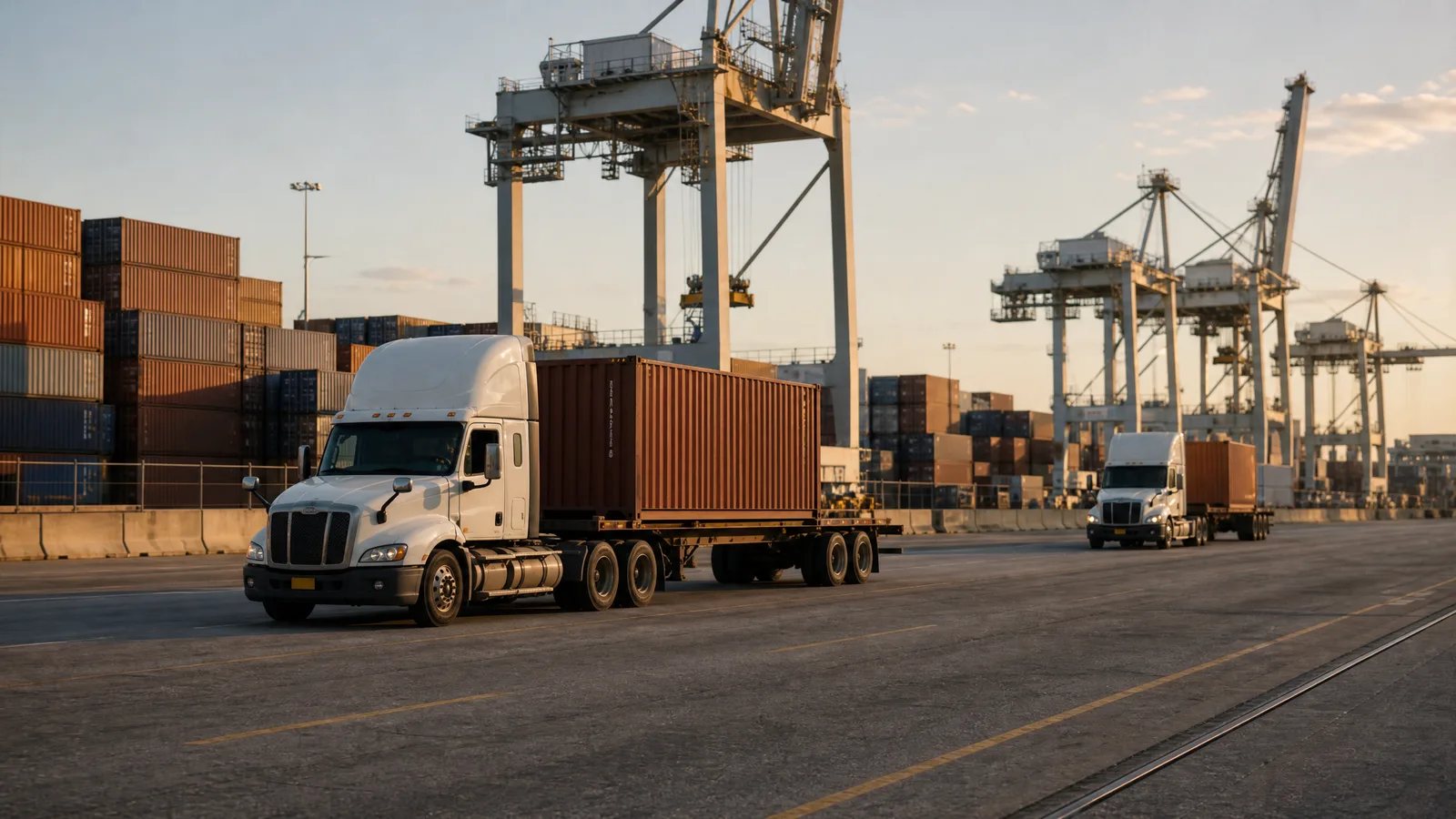
- Port of Houston drayage. The Port of Houston is the largest port in the United States by foreign waterborne tonnage and one of the largest container ports. Drayage operators move containers between port terminals, intermodal yards, distribution centers, and shippers across the Houston metro. Port drayage is steady, repeat-customer work, but it has specific access requirements (TWIC cards, port credentials) and insurance demands (cargo coverage, terminal access endorsements).
- Petrochemical and tanker hauling. The Houston Ship Channel, Baytown, Texas City, and Pasadena are home to the largest petrochemical complex in North America. Tanker operators move crude oil, refined products, chemicals, and finished petrochemicals between refineries, storage terminals, and end users. This is among the highest-premium segments in commercial trucking due to hazmat exposure, pollution liability, and FMCSA's higher liability minimums.
- I-10 and I-45 corridor freight. I-10 East runs from Houston to Beaumont and Louisiana. I-10 West runs to San Antonio, El Paso, and California. I-45 connects Houston to Dallas-Fort Worth and continues north. These are some of the highest-volume freight lanes in the country and Houston operators run all three regularly.
- Oilfield service hauling. Houston is the headquarters of the US oil and gas industry. Service companies move drilling components, frac sand, completion equipment, and oilfield waste between Houston supply yards and well sites in the Eagle Ford and Permian.
- Construction and aggregate hauling. Houston is among the largest US metros by absolute population growth. Year-round residential, commercial, and infrastructure construction creates steady demand for dump truck, flatbed, and concrete operators.
- Last-mile and regional delivery. Major retailers (Amazon, Walmart, Costco, Home Depot) operate Houston-area distribution centers. Box truck operators handle last-mile and middle-mile freight to customers across the metro.
Insurance Requirements for Houston Operators
Houston-based operators are subject to the same federal and Texas state insurance requirements as any other Texas-based motor carrier. The basics:
- FMCSA minimums apply for interstate operations. $750,000 for general freight, $1 million for oil transport, and $5 million for hazardous materials in 49 CFR 387.9.
- Texas intrastate minimums apply for in-state operations. $500,000 combined single limit for general freight under TxDMV rule 43 TAC 218.16.
- Cargo insurance. No federal minimum for general freight; the real floor is what brokers and shippers require, typically $100,000+.
- BMC-91 filing required for own-authority interstate operators. Without it, your authority cannot activate. See our new authority insurance guide.
For the full breakdown, see the Texas truck insurance requirements guide.
Coverage for Houston Operators
Beyond the basics, Houston operators typically carry coverage that addresses the local market:
- Pollution liability. Petrochemical, tanker, and hazmat operators have to carry pollution coverage. Even general freight carriers running through chemical corridors sometimes carry environmental coverage as a precaution.
- Higher physical damage limits. Hurricane exposure and the higher value of port drayage tractors push physical damage premiums up. Many Houston operators carry comprehensive coverage with named-storm deductibles.
- Cargo coverage with port-specific endorsements. Drayage operators often carry separate inland marine or container coverage for goods stored or transferred at port terminals.
- Higher liability limits. Houston traffic on I-10, I-45, and the 610 Loop produces higher claim frequency. Many fleet operators carry $2 million to $5 million in primary liability or supplement with umbrella coverage.
- MCS-90 endorsement. Required for hazmat operations and a useful backstop for any for-hire carrier.
- Hired and non-owned auto. Houston operators who run trip-leases or who use independent contractors often carry this to cover liability for vehicles they do not own.
Insurance Cost Considerations in Houston
Houston commercial trucking insurance tends to run slightly higher than the Texas state average. The main reasons:
- Hurricane and storm exposure. Hurricane Harvey (2017) produced billions of dollars in commercial vehicle claims across the Houston metro. Subsequent renewal pricing reflected the loss experience. Hurricane Ike, Hurricane Beryl, and other named storms have continued to push rates.
- Hazmat concentration. The Houston Ship Channel petrochemical corridor has the highest concentration of hazmat operators in the state, and hazmat carries the highest commercial trucking premiums of any segment.
- Traffic density and accident frequency. Houston freeway congestion and the layout of the Loop and Beltway 8 produce more accidents per mile driven than rural Texas operations.
- Litigation environment. Texas commercial trucking lawsuits have produced several large jury verdicts in recent years. Insurers price defensively in plaintiff-friendly venues.
For specific cost ranges by truck type and operator size, see our commercial truck insurance cost guide. Rates vary based on individual factors and the figures there are general estimates.
How to Get Houston Trucking Insurance Quotes
The Houston commercial trucking market has a deep bench of agents and carriers, but not every agent is the right fit. Port drayage operators want agents who understand container coverage and terminal access requirements. Petrochemical haulers want agents who write hazmat and pollution coverage. Construction and dump truck operators want agents who handle TxDOT subcontractor requirements.
Find an agent who serves the Houston market. Tell them what you haul, where you run, and what your customers require. The right agent will quote multiple carriers and find the policy that fits your operation.
Related Houston Trucking Resources
- Texas Commercial Trucking Insurance Overview
- Texas Truck Insurance Requirements
- Dump Truck Insurance (for Houston construction haulers)
- Cargo Insurance (for Houston port drayage)
- New Authority Insurance (for Houston-area startups)