
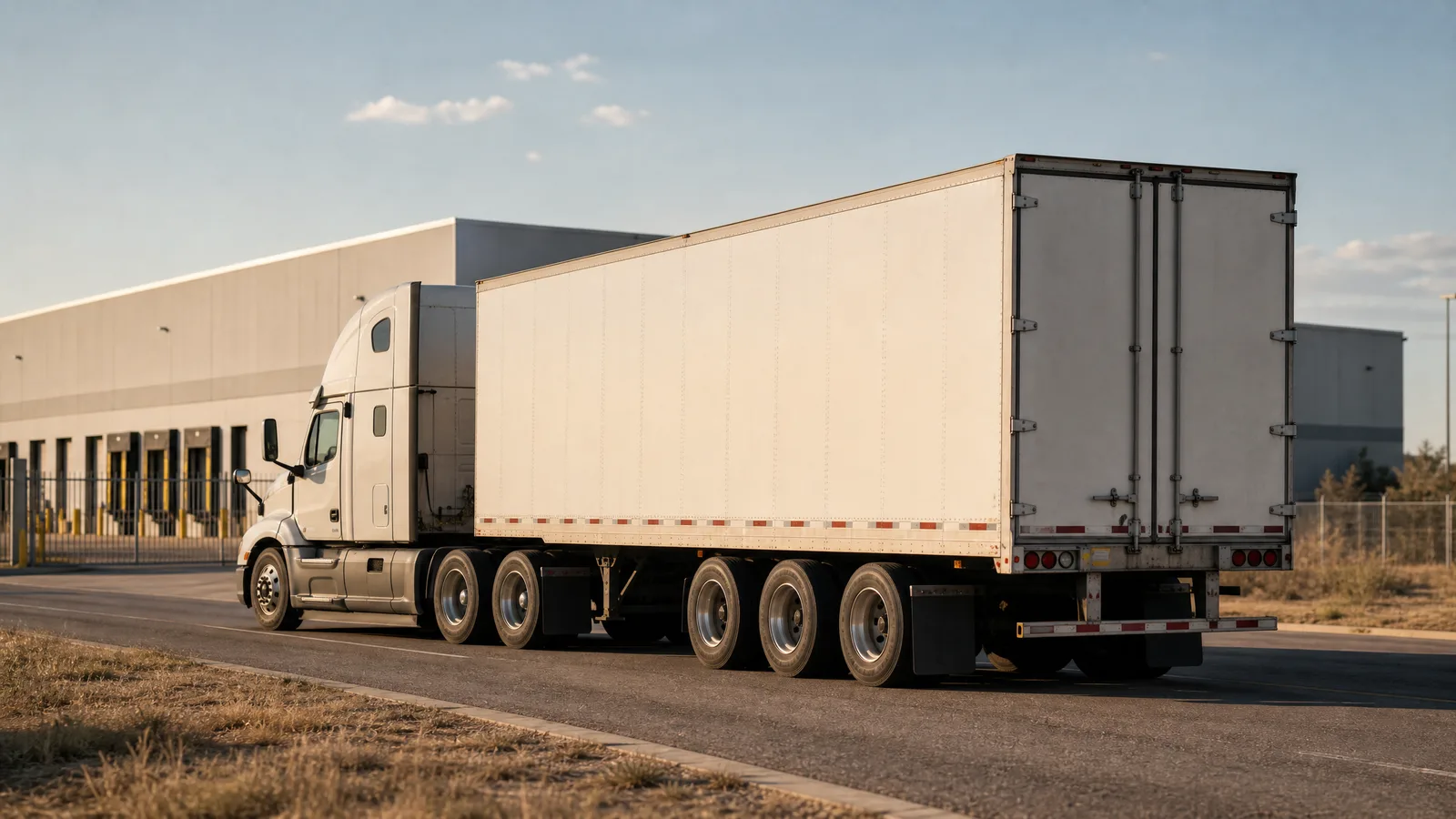
What For-Hire Trucking Means
A for-hire carrier is any motor carrier that transports freight or passengers belonging to others for compensation. The defining characteristic is that the cargo does not belong to the operator. A truck moving a Walmart shipment under contract to a freight broker is for-hire. A truck owned by Walmart moving Walmart inventory to a Walmart store is private. The same physical truck and driver could do either depending on the operating model.
The federal regulatory regime for for-hire carriers is much more involved than for private carriers. The FMCSA requires for-hire interstate carriers to:
- Register with the FMCSA and obtain operating authority (MC number)
- Get a USDOT number
- File proof of insurance with the FMCSA (BMC-91 for liability, sometimes BMC-34 for cargo)
- Maintain minimum liability insurance per cargo classification
- Carry cargo insurance at the limits your brokers and shippers require (a federal cargo minimum applies only to household goods carriers)
- File BOC-3 designating a process agent in each state of operation
- Maintain compliance with FMCSA safety regulations
- Track CSA scores and respond to FMCSA enforcement
For-Hire Insurance Requirements
The federal liability minimums for for-hire interstate carriers (49 CFR 387.9):
- $750,000 for general freight over 10,001 lbs GVWR
- $1,000,000 for oil transport
- $1,000,000 for most hazmat
- $5,000,000 for poisonous gases and certain hazmat
Federal cargo insurance minimums (49 CFR 387.303) apply only to household goods carriers:
- $5,000 per vehicle minimum
- $10,000 per occurrence minimum
General freight has no federal cargo minimum. Brokers and shippers set the real requirement, typically $100,000 or more (see cargo insurance overview).
BMC-91 Filing
The BMC-91 (or BMC-91X for surplus lines markets) is the proof-of-insurance filing your insurer submits to the FMCSA on your behalf. Without it, your operating authority cannot activate. The process:
- Your insurer files the BMC-91 electronically with the FMCSA after binding your liability policy.
- FMCSA posts the filing to your record. No processing time is published.
- Your authority status on the SAFER system changes from "pending" to "active."
- You can legally start hauling for hire.
For new authority operators, see our new authority insurance guide for the full first-time process.
Coverage Stack for For-Hire Carriers
- Commercial auto liability. The FMCSA minimum under 49 CFR 387.9 applies. Most carriers carry $1 million because brokers and shippers expect it.
- Cargo insurance. No federal minimum for general freight; broker and shipper requirements typically $100,000+.
- Physical damage. Required if financed; recommended even if paid off.
- General liability. Standard $1M / $2M for site operations and non-driving exposures.
- Workers compensation or occupational accident. For employees and operators.
- MCS-90 endorsement. Required as proof of financial responsibility on liability policy.
- Trailer interchange coverage. If pulling trailers from other carriers.
- Hired and non-owned auto. If using owner-operators or trip-leases.
- Pollution liability. For hazmat or environmental exposure.
- Umbrella / excess liability. Common for higher-volume for-hire carriers.
For-Hire vs. Private Carrier Insurance
| Feature | For-Hire Carrier | Private Carrier |
|---|---|---|
| FMCSA registration required | Yes (interstate for-hire) | Yes if interstate over 10,001 lbs GVWR |
| Operating authority (MC number) | Required | Not required |
| BMC-91 filing | Required | Not required |
| Cargo insurance | Required by brokers and shippers in practice | Not required (but lender or contract may require) |
| Liability premium (relative) | Higher | Lower |
| Risk profile | More miles, varying cargo, higher exposure | Predictable cargo, often shorter routes |
How Much Does For-Hire Trucking Insurance Cost?
For-hire trucking insurance follows the same cost ranges as commercial trucking generally. See our commercial truck insurance cost guide for detailed ranges by truck type, operator size, and coverage.
Quick reference for for-hire general freight:
- Small fleet (3 to 10 trucks)
- Owner-operator, established (3+ years), single truck
- Owner-operator, new authority
Costs vary based on individual factors. Hazmat, oilfield, and specialty for-hire carriers pay more.
How to Get For-Hire Trucking Insurance Quotes
Information you will need:
- Truck and trailer information (year, make, model, VIN, value)
- USDOT and MC number
- Cargo types you haul
- Operating radius and lanes
- Driver CDL info and MVRs
- Loss history
- Specific shipper or broker insurance requirements
Find an agent who writes for-hire trucking insurance. Tell them what you haul, where you run, and what your customers require.