
What Is Hot Shot Trucking Insurance?
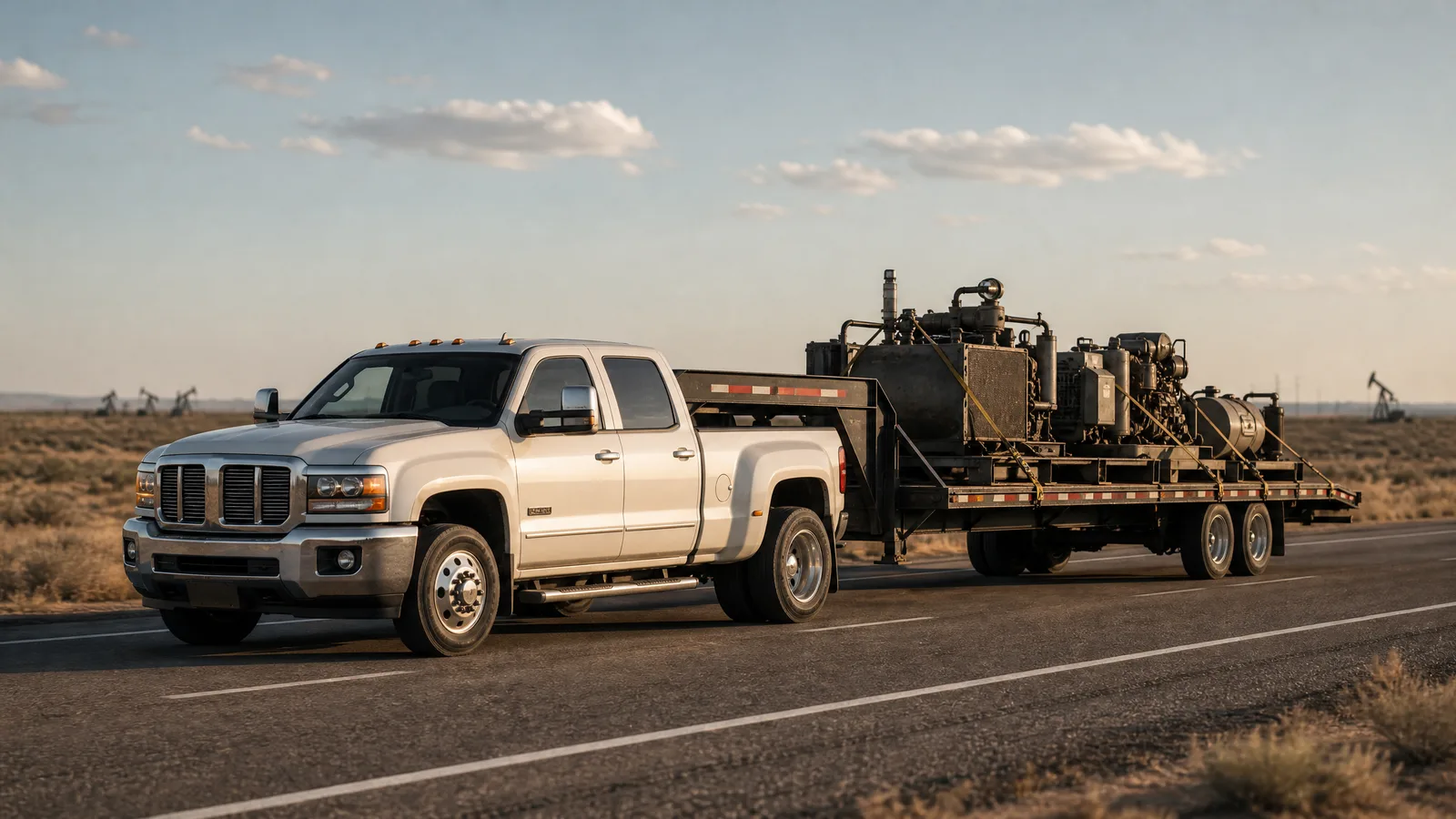
Hot shot trucking is the move-it-now segment of the freight market. Operators run heavy-duty pickups (typically Class 3 to Class 5: Ram 3500, Ford F-450/F-550, Chevrolet Silverado 4500/5500) pulling gooseneck or flatbed trailers, hauling time-sensitive less-than-truckload freight that does not need a full semi. Common hot shot freight includes oilfield equipment, construction materials, agricultural machinery, and expedited LTL shipments.
Hot shot insurance is commercial auto and cargo coverage built for this category of operator. The product types are the same as full semi insurance (auto liability, cargo, physical damage, general liability), but the rating, limits, and carriers are tuned for smaller trucks running shorter loads.
Hot Shot Insurance Requirements
The FMCSA does not have a separate "hot shot" category. Federal rules apply based on combined gross vehicle weight rating (GVWR) and whether you are operating interstate for hire.
| Combined GVWR | FMCSA Authority Required? | CDL Required? | Insurance Implications |
|---|---|---|---|
| Under 10,001 lbs | No (under the federal threshold) | No | Commercial auto required if for-hire; FMCSA minimums do not apply |
| 10,001 to 26,000 lbs | Yes (if interstate for-hire) | No | FMCSA $750K liability minimum for general freight |
| 26,001 lbs or more | Yes | Yes (Class A CDL) | Same FMCSA minimums; rating like full semi operators |
The most common hot shot setup, a one-ton dually pulling a 30 to 40-foot gooseneck trailer, lands in the middle category: combined GVWR over 10,001 lbs but under 26,001 lbs. This means full FMCSA registration is required (USDOT number, MC number, BMC-91 filing), but a CDL is not. Source: FMCSA CDL requirements.
Coverage Types for Hot Shot Operators
The coverage stack for hot shot is similar to a single-truck owner-operator running their own authority:
- Commercial auto liability: Required for all for-hire operators. FMCSA minimum is $750,000 for general freight (49 CFR 387.9). Most hot shot operators carry $1 million because brokers expect it.
- Cargo insurance: No federal minimum for general freight, but effectively mandatory: most load boards and brokers require $100,000 minimum. Hot shot loads are often higher value (oilfield gear, machinery), so $250,000 is common.
- Physical damage on the truck: Covers the pickup for collision and comprehensive (theft, fire, weather, vandalism). Required if the truck is financed.
- Physical damage on the trailer: Goosenecks and flatbeds can run $15,000 to $40,000+. Covering the trailer separately is standard. Some policies bundle the trailer with the truck; others write it as a separate item.
- General liability: Covers non-driving business risks like customer injury at a job site or property damage during loading. Required by some shippers.
- Occupational accident: Covers your medical expenses and lost wages if you are injured on the job. A common substitute for workers comp because Texas does not require it.
- Trailer interchange: If you ever pull trailers owned by another carrier, this covers physical damage to those trailers in your care.
How Much Does Hot Shot Insurance Cost?
Hot shot sits below full semi coverage on price but is still rated as commercial trucking, not personal auto. What moves it within that band is the same set of factors as any other operation: cargo, radius, limits, driver record, and authority age.
The lower end of the range applies to:
- Non-CDL operations (under 26,001 lbs combined GVWR)
- Operators with 3+ years of clean experience
- Local or short-haul radius (under 250 miles)
- General freight (no hazmat, no oilfield)
- Older trucks and trailers (lower physical damage exposure)
The upper end of the range applies to:
- CDL operations with combined GVWR over 26,001 lbs
- New operators (under 1 year experience or new authority)
- OTR or long-haul radius (1,000+ miles)
- Oilfield equipment, heavy machinery, or specialty freight
- Newer, higher-value trucks and trailers
Hot shot is generally cheaper than full semi truck insurance because the equipment is smaller and lighter, exposure is lower, and many insurers price it like a hybrid of commercial auto and trucking.
Non-CDL Hot Shot Insurance
Non-CDL hot shot is the entry point for many new owner-operators. The barrier is lower (no CDL required), the truck is cheaper than a Class 8 tractor, and the loads can be profitable, especially in the oilfield and construction segments.
Insurance considerations for non-CDL hot shot:
- Commercial auto is still required. Personal auto insurance does not cover for-hire freight, even on a non-CDL setup.
- FMCSA registration applies if interstate for hire. Combined GVWR over 10,001 lbs and crossing state lines means USDOT, MC number, and BMC-91 filing.
- Some insurers specialize in non-CDL commercial. Not every commercial auto insurer wants to write non-CDL hot shot. Working with an agent who has access to the right markets matters.
- Rates can be lower than CDL operations. The smaller size and shorter typical radius make non-CDL rates more favorable in some carrier programs.
- Driver MVR is heavily weighted. Without CDL training records to fall back on, insurers rely on the personal MVR for rating. A clean driving record matters more than ever.
Hot Shot Insurance in Texas
Texas is one of the largest hot shot markets in the country, driven by:
- Permian Basin oilfield activity. Hot shot operators move drilling components, pump parts, and emergency replacement equipment to remote drilling sites. Oilfield freight pays well but requires higher-rated insurance because of cargo value and the difficult driving conditions in West Texas.
- Eagle Ford Shale. South Texas oilfield south of San Antonio. Similar dynamics to the Permian: high-value oilfield freight with tight delivery windows.
- Construction equipment hauling. Texas has year-round construction across DFW, Houston, Austin, and San Antonio. Hot shot operators move bobcats, generators, scaffolding, and other equipment between job sites.
- Agricultural equipment. Tractors, hay equipment, and farm implements move on hot shot trailers across rural Texas.
- Expedited LTL. Time-sensitive less-than-truckload freight from Texas distribution hubs to regional destinations.
Hot shot operators based in San Antonio, Midland, Odessa, Houston, and Laredo run the most diverse mix of freight. For more on Texas commercial trucking, see our Texas overview.
How to Get Hot Shot Insurance Quotes
Hot shot is a niche segment within commercial auto. Many general commercial insurance agents do not write it well. Working with an agent who has experience placing hot shot policies will get you better rates and the right coverage.
Information you will need:
- Truck year, make, model, VIN, GVWR, and class (3, 4, or 5)
- Trailer year, make, model, type (gooseneck, flatbed), length, and value
- Combined GVWR (truck + trailer)
- Driver CDL info (or MVR if non-CDL)
- USDOT and MC number, if you have them
- Typical operating radius and lanes
- Cargo types you plan to haul
- Years of experience
Find an agent who specializes in hot shot trucking insurance. Tell them whether you are CDL or non-CDL, what you haul, and where you run.