
Semi Truck Insurance: What You Need
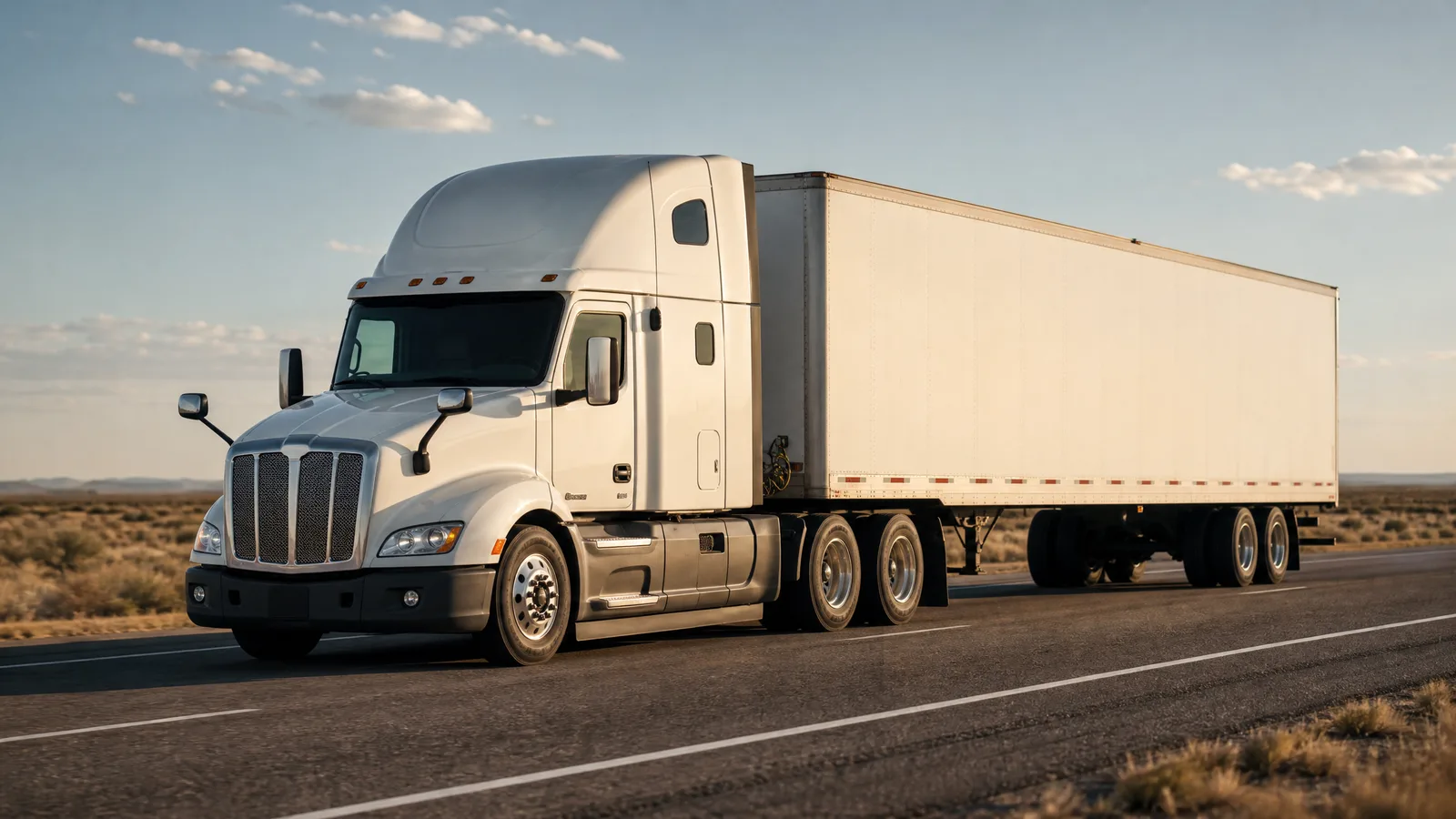
Semi truck insurance covers Class 8 tractors hauling trailers under either a motor carrier's authority or the operator's own FMCSA authority. The Class 8 segment is the backbone of commercial trucking: long-haul over-the-road carriers, regional haulers, intermodal drayage, and most for-hire freight in the United States runs on Class 8 equipment. Insurance for these trucks is the most established and most regulated segment of commercial trucking insurance.
What you actually need depends on whether you run your own authority or lease to a motor carrier. The coverage products are the same; the responsibility for each one shifts between you and the carrier based on the operating model. This page covers both.
Coverage for Owner-Operators with Their Own Authority
If you hold your own FMCSA operating authority, you are the motor carrier. Your insurance stack:
- Commercial auto liability. FMCSA minimum is $750,000 combined single limit for general freight over 10,001 lbs (49 CFR 387.9). $1 million for oil transport. $5 million for hazardous materials. Most operators carry $1 million because brokers expect it.
- Cargo insurance. No federal minimum for general freight (the cargo minimums in 49 CFR 387.303 apply only to household goods carriers). Brokers and shippers set the real requirement, typically $100,000 minimum.
- Physical damage on the tractor. Required if financed; recommended even if paid off. Covers collision and comprehensive (theft, fire, weather, vandalism).
- Physical damage on owned trailers. Most operators with their own authority own at least one trailer; some own multiple. Covers collision and comprehensive on the trailer.
- General liability. Standard $1M / $2M for non-driving business risks (loading, unloading, customer property damage).
- Workers compensation or occupational accident. Texas does not require workers comp, but many shippers do. Single-driver operators often carry occupational accident instead.
- BMC-91 filing. Your insurer files this with the FMCSA. Without it, your authority cannot activate.
- Trailer interchange coverage. If you pull trailers owned by other carriers, this covers physical damage to those trailers in your care.
If this is your first authority, see our new authority insurance guide for the full process.
Coverage for Leased Owner-Operators
If your truck is leased to a motor carrier, the carrier's policy covers you while you are under dispatch. Your insurance stack is smaller and focused on the gaps the carrier's policy does not cover:
- Non-trucking liability (NTL): Covers you when driving the truck off dispatch for personal use.
- Bobtail insurance: Covers your tractor when driving without a trailer attached.
- Physical damage on the tractor. Required if your truck is financed; recommended even if paid off.
- Occupational accident. Covers your medical and lost wages if injured. Common substitute for workers comp.
The leased operator package is the least expensive stack in trucking, because the motor carrier is carrying the liability and cargo exposure while you are on dispatch. For more details, see our owner-operator insurance overview.
Coverage for Fleet Operators
Fleets (typically 3+ trucks, sometimes 5+) carry a master commercial trucking policy that covers all trucks under one umbrella. Fleet structure differences:
- Master auto liability and cargo policies. Cover all trucks and drivers; rated by total fleet exposure.
- Fleet size. Per-truck premium generally falls as a fleet grows, because fixed costs spread and the loss history becomes credible enough to rate on. Where a carrier puts its breakpoints is its own filing, and they differ between carriers, so ask yours where its next one sits.
- Loss-sensitive options. Larger fleets can use higher deductibles, self-insured retentions, or even captive insurance arrangements.
- Formal safety programs. Carriers often require formal driver training, dashcam programs, and safety committee structures for fleets above a certain size.
For more on fleet coverage, see our fleet insurance overview.
How Much Does Semi Truck Insurance Cost?
Your operating model drives the premium more than the tractor does. From lowest to highest annual cost:
- Leased to a motor carrier. The lowest band. The carrier's policy covers liability and cargo while you are on dispatch, so you are buying the gap coverages only.
- Established own authority (3 or more years, clean record). A full program: liability, cargo, physical damage, and the rest of the stack, all on you.
- New authority (under 1 year). The highest band for a single truck. Carriers have no loss history to price against and rate new ventures as unproven.
- Fleets. Per-truck cost generally falls as the fleet grows. Fixed program costs spread across more units, and larger fleets can negotiate loss-sensitive structures.
For dollar figures from the two insurers that publish their methodology, along with the factors that move your premium in each direction, see our commercial truck insurance cost guide.
Operating Radius and Its Impact on Rates
Operating radius is one of the bigger rating factors for semi truck insurance:
- Local (under 100 miles). Lowest premiums. Typical for drayage, regional intermodal, and short-haul construction freight.
- Intermediate (100 to 500 miles). Mid-range. Typical for regional dry van and refrigerated freight running between major Texas metros.
- Long-haul (500+ miles). Higher rates. OTR operators running multi-state lanes accumulate more miles per year and have more exposure.
- OTR with team driving. Specialty rating because team operations can cover more miles per truck per year. Some carriers offer specific team-driver programs.
Semi Truck Insurance in Texas
Texas commercial trucking is anchored by Class 8 semi operations. Major freight corridors (I-10, I-20, I-35, I-45) all see heavy semi traffic. The Texas semi truck market is distinguished by:
- Heavy oilfield service operations. Permian Basin and Eagle Ford freight pushes premium rates higher for operators in those segments.
- Major distribution hubs. DFW intermodal and distribution, Houston port and petrochemical, San Antonio I-35 corridor.
- Border crossing operations. Laredo and El Paso operators need cross-border coverage in addition to standard semi insurance.
- Litigation environment. Texas has seen large jury verdicts in commercial trucking cases, and that shapes how much excess coverage brokers put in front of a fleet. How much any one operator buys above the federal floor is a decision for the operator and the agent, not a figure this site can generalize.
- Hurricane and hail exposure. Gulf Coast and DFW operations face elevated physical damage premiums.
For more on the Texas market, see our Texas commercial trucking insurance overview.
How to Get Semi Truck Insurance Quotes
Information you will need:
- Tractor year, make, model, VIN, and value
- Trailer information (if owned)
- Driver CDL info and MVR
- USDOT and MC number, if applicable
- Operating model (leased vs. own authority)
- Cargo types you haul
- Operating radius and typical lanes
- Years of CDL experience
- Loss history
Find an agent who writes semi truck insurance. Tell them whether you are leased or own-authority, what you haul, and where you run.